Excavation and groundwork are the first and most essential phase of any construction process. The quality of services decides the structural integrity, drainage performance, and long-term stability of everything built above it. Getting this excavation and groundwork services phase wrong costs a lot more to fix than it does to get it right from the start.
Understanding what each service involves puts you in a better position before work begins. Excavation is the digging out and removal of soil, rock, or fill from a site to a specified depth. It creates the physical dimension for foundations, basements, drainage runways, and underground facilities. Groundwork then takes over. It covers drainage installation, sub-base laying, foundations, and utilities. All of this is completed before the structure above begins.
Read on to understand exactly what each stage involves, what to look for in a contractor, and how to get your project started on solid ground.
Excavation vs groundworks: what’s the difference?
Excavation and groundwork services are two types of below-ground work, yet each plays a distinct role in getting your project off the ground. Here is how they compare:
Excavation
- Cuts into the ground to the required depth and removes soil, debris, or any material
- Prepares the formation level before anything else can begin
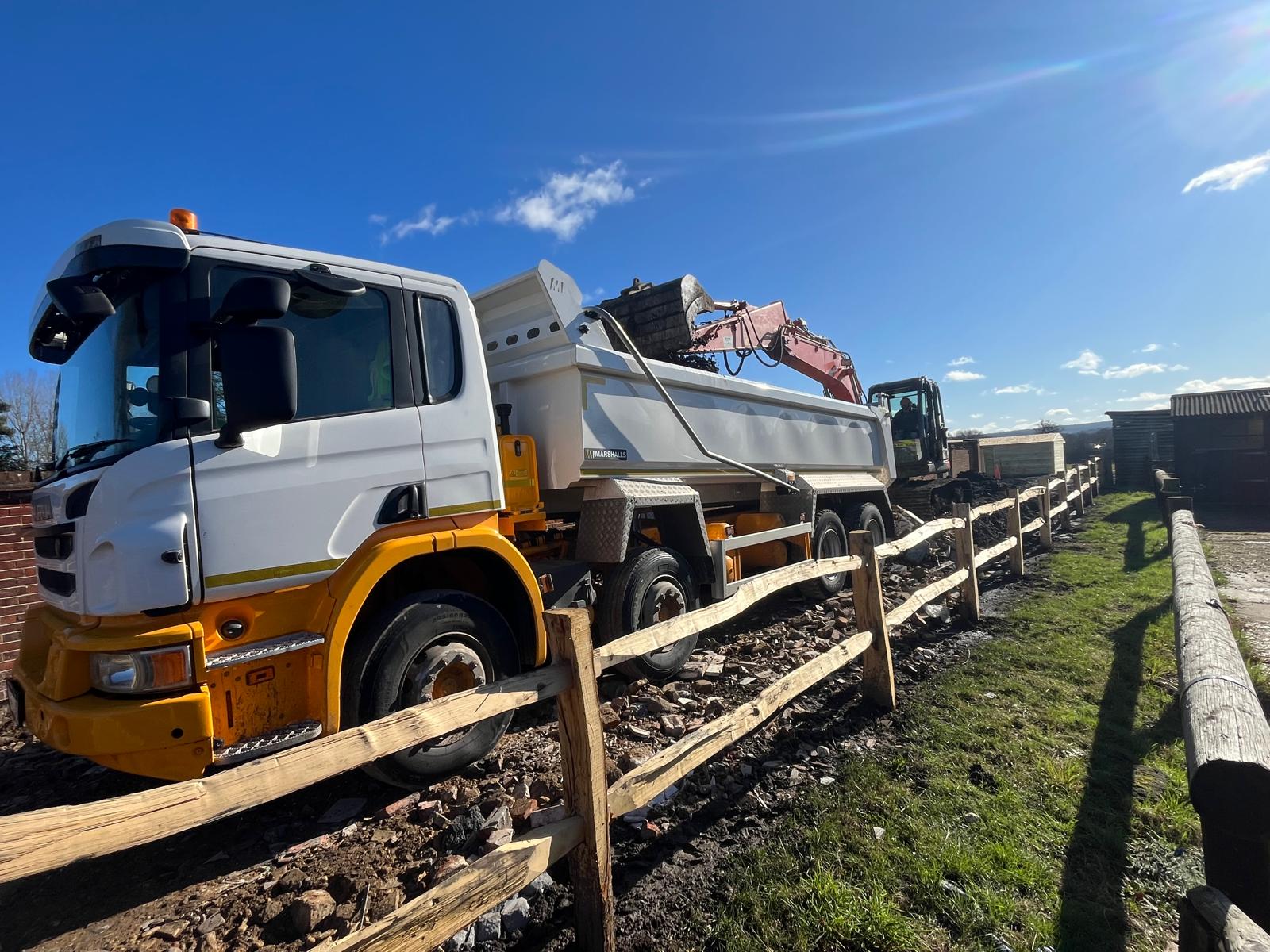
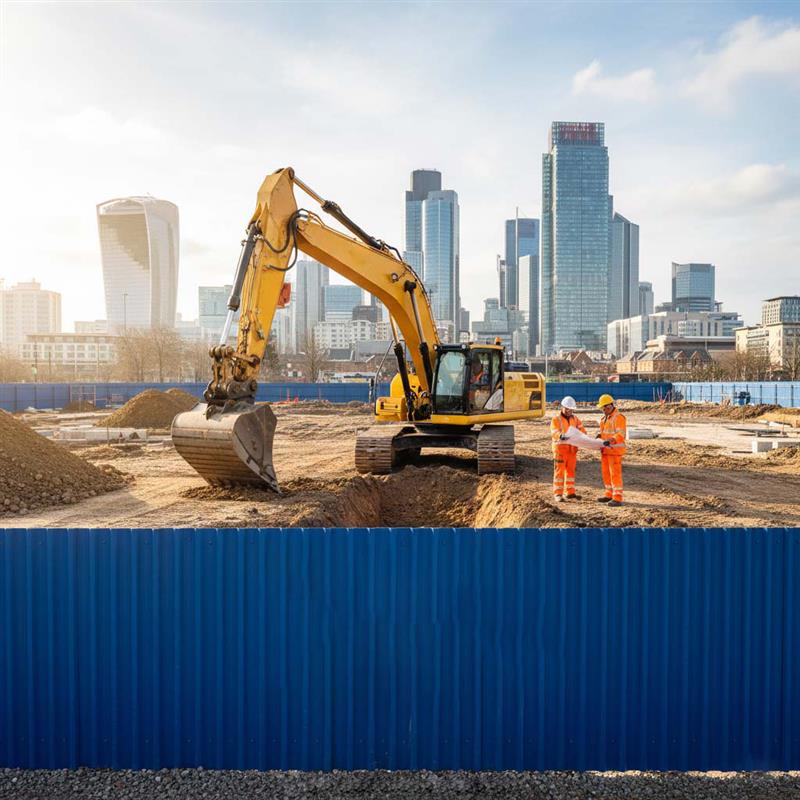
- Works with excavators, dumpers, and shoring systems
Groundworks
- Builds drainage, foundations, and sub-base into the excavated space
- Installs utility ducting before above-ground work begins
- Uses compactors, laser levels, and a concrete plant
In short, excavation creates working space. Groundwork builds within it. Both stages work in sequence, which is why one experienced contractor managing the full below-ground programme delivers the best results.
The core services related to excavation
Professional excavation and groundwork services cover a range of below-ground operations. Here is what each one involves.
Basement excavation
Basement excavation is the digging below ground level. It is to create space for basements or any underground constructions. Groundwater levels, soil bearing capacity, and proximity to neighbouring foundations all determine which method is used.
Excavation for construction
This service is needed for new residential, extensions, and commercial buildings. This includes removing topsoil, bulk excavation to the formation level, and trenching or pad positions to exact engineering dimensions.
Excavation pit works
The excavation pit is being dug for various construction purposes, including swimming pools and underground storage tanks. The pit is excavated to the measured depth and size. Temporary battering or sheet piling is also set up where required.
Core services related to groundworks
Once excavation creates the working space, groundworks are carried out. These are the core services in a groundworks project:
Groundwork maintenance
Groundwork maintenance is typically required on existing residential properties, commercial sites, and car parks where the drainage and sub-base have failed.
With drainage failures and cracked chambers, groundwater enters the subbase. It hence reduces the load-bearing capacity. Therefore, groundwork maintenance requires identifying these conditions and fixing them before they affect the structure above.
Groundworks and drainage
Drainage groundworks are required on every new build and development site where surface water and foul water systems are to be installed. This service also covers sites where existing drainage needs are being diverted or upgraded to meet building regulations.
Pipe runs are installed to precise falls and confirmed by a laser level before any backfilling begins. Every run is tested on site to ensure it performs correctly from day one. Bedding and surrounding materials are selected based on the actual ground conditions, whether the system uses clay, PVC, or concrete pipework.
Groundworks construction
Full groundworks construction is required at the start of any new build or major development. It includes everything from initial site clearance right through to a full prepared platform ready for the structural build to begin.
The site clearance, sub-base installation, foundation construction, and utility ducting are completed before the above-ground structure begins.
Navigating the planning & legal landscape
There are planning, permit, and safety requirements for all excavation and groundworks services. Understanding these ensures your project is compliant and safe.
Site surveys & soil reports
All responsible contractors conduct a site survey and soil report before starting to dig. The survey identifies existing underground services, records site constraints, and conducts trial pits. The soil report gives the bearing capacity data needed to specify the appropriate foundation type.
Together, they give the project a verified starting point and prevent costly mistakes once work is underway.
Permits & regulations
The majority of minor residential groundworks are within permitted development. But basement excavations for party walls, highway works, utility diversions and certain drainage installations will require formal consent. A professional contractor verifies all permit requirements at the initial site visit.
Safety first
Excavation carries real on-site risk, and no responsible contractor ignores it. Before any dig begins, a documented method statement should be in place covering how the work will be carried out and how risks will be managed.
All operatives should hold current CSCS cards. CAT scanning must be carried out before breaking ground to locate live utilities. Any trench deeper than 1.2 metres requires proper shoring before anyone enters it. These are the baseline standards on any professionally managed site.
Specialist equipment: The right tools for the job
The right equipment is very important for your specific site. Here is how the right selection directly affects accuracy, safety, and speed.
- Micro vs heavy excavators : The right machine depends on site size, access constraints, and the volume of material being moved.
- Micro excavators (1-3 tonnes): Used in residential gardens with limited access and space around existing structures.
- Mid-range excavators (5-13 tonnes): They are used for the most common residential and light commercial groundworks.
- Heavy excavators (20 tonnes or more): These are used on large commercial plots and for deep basement excavations.
Laser levelling technology
Laser levelling allows operatives to check and maintain accurate levels across the entire working area. For drainage work specifically, where pipe falls must be consistent over long runs, this technology ensures the system drains correctly from day one rather than causing problems down the line.
The landscape designer’s perspective: Groundwork beyond buildings
Groundwork is not just applicable to buildings. For landscape designers and architects, underground preparation is also important in designing outdoor spaces that must perform structurally over time.
Retaining walls
Retaining walls are structural elements used to manage level changes on sloping sites. They hold back the earth, create usable flat ground, and stop soil from shifting toward nearby structures. Long-term performance depends on the drainage layer, geotextile membrane, and compacted backfill behind the wall.
Skip any of these, and the wall will crack and sooner or later will be forced to come down.
Sub-base preparation
Sub-base preparation is the groundwork layer that is beneath any hard landscaped surface. Most people focus on the surface finish, but the sub-base is what keeps it level and stable over time. Without it being done correctly, driveways crack, and patios sink. The only solution is to lift everything and start again.
Correct preparation means fully stripping the topsoil. Then compacting the MOT Type 1 base to at least 100mm for foot traffic and 150mm for vehicles, and confirming compaction before surfacing has gone down.
How to choose groundwork specialists near me
Searching for groundwork specialists near me or excavation services near me will yield many options. But ask these questions to find the professional one.
Essential questions to ask
- Do you have full insurance?
- Do your operatives hold current CSCS cards? This affirms the site’s competency.
- Do you have a portfolio of similar projects? They must be on the same scale and have the same ground conditions.
- Who supervises the work daily? There must be an experienced supervisor.
Red flags
Avoid these in the process:
- No method statement before the start of work implies no safety plan
- Unclear responses to waste disposal may leave you with the liability
- Any quote generated without visiting the site is not a reliable figure
The quote process
The lowest-cost quote is unlikely to be the best choice. Always ask for itemised breakdowns and compare line items. A quote created without a site survey will create unnecessary costs during the mid-programme.
Conclusion
Ground preparation is not a stage to rush. Every element of the structure above depends on the decisions made below ground, and those decisions have long-term consequences. Whether you are managing a residential extension, a new development, or a large-scale civil project, the groundwork phase sets the standard for everything that follows.
For excavation and groundwork carried out to a professional standard, Anvil Developments brings over 25 years of active site experience, more than 1,500 completed projects, and a 98% client satisfaction rate across the UK. Our CSCS-certified team manages every stage from initial ground assessment through to final site handover, with transparent pricing. Call +441444523598 or request your free quote online today.